Markets have a way of making investors hold two thoughts at once. Economic growth remains supportive, yet higher borrowing costs are putting pressure on parts of the economy. The major stock indexes have held up reasonably well, but the gains have become more dependent on a relatively small group of companies. Neither observation tells the whole story, and that is what makes the current environment interesting.
There is also a plausible path toward improvement. If inflation moderates and interest rates ease, some of the struggling stocks could find their footing as the economy continues to expand. But we expect that outcome will require more than a favorable calendar. As we head into the final quarter of the year, we’re watching whether market participation improves and whether higher financing costs begin to have a broader effect on growth.
1. Will the Rest of the Market Catch Up?
The S&P 500’s modest September decline did not capture how difficult the month was for many stocks. Technology and Communication Services were the only sectors to finish higher, while five sectors lost more than 5%. The strength of a few influential companies helped offset weakness across much of the market, leaving the headline index looking healthier than many of its constituents.
That distinction matters. A rally supported by more companies has more sources of strength to draw upon. When leadership narrows, weakness in the largest stocks can have an outsized effect, and several of the indicators we follow have become more cautious as participation has deteriorated. Those readings deserve our attention, even though they do not establish that a major downturn is underway.
But weaker participation can improve without the entire market having to fall. One possible resolution is that the laggards catch up, particularly if interest rates ease and earnings remain sound. Another is that the leaders lose ground. The important distinction is how the gap closes. We would be encouraged if strength were to spread beyond the companies currently carrying the index.
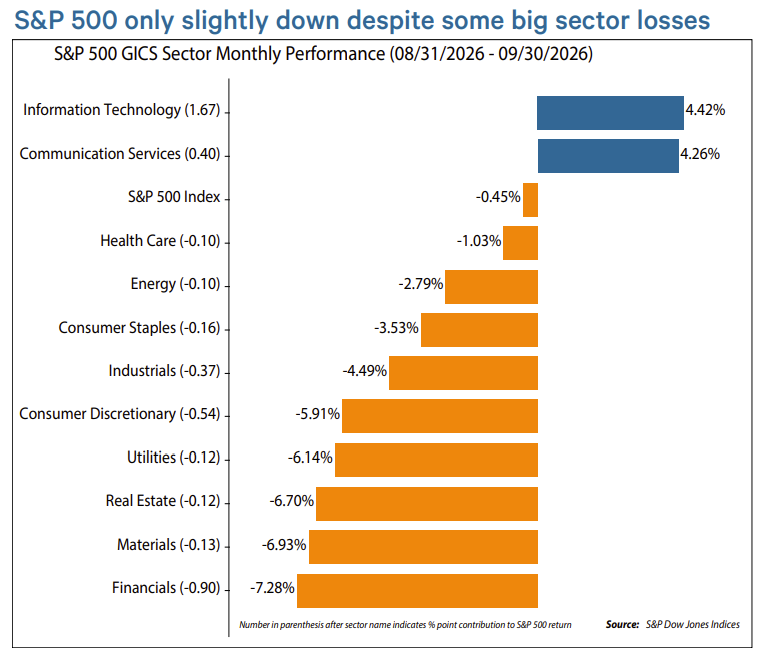 Bottom Line: Narrow leadership leaves the market more vulnerable, but it also leaves room for a broader recovery. Improving participation would be an encouraging development, especially if it accompanies relief from higher interest rates.
2. Higher Rates are Having Different Effects
It is tempting to assume that rising interest rates must mean falling stock prices. The relationship is more complicated because the reason rates are rising matters. Stronger economic activity can lift both yields and expected corporate earnings, allowing stocks to advance even as borrowing costs increase. BCA’s latest research emphasizes that the level of inflation-adjusted rates relative to economic growth is more informative than their direction alone.
Housing offers a different perspective. Elevated mortgage rates have kept activity subdued, and the recent increase in longer-term yields has added another obstacle. Strategas notes that policy can appear relatively accommodating through the lens of stock prices while remaining restrictive for housing. So, resilience in the equity market does not mean higher rates are harmless. Their effects reach different parts of the economy at different speeds.
The reverse deserves consideration, too. If inflation cools enough to ease rate pressure while growth remains intact, housing and other sensitive areas could benefit. That would be a more constructive development than yields falling because businesses are cutting back and earnings expectations are weakening. BCA sees scope for a less aggressive tightening cycle than markets fear, although that remains an outlook rather than a settled outcome.
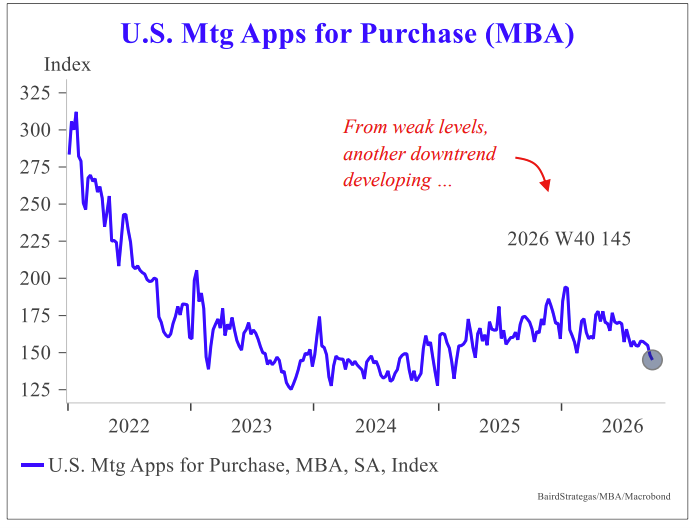
Bottom Line: Higher rates are creating real headwinds, but their impact is uneven. Relief would be welcome, and the most favorable version would come from moderating inflation alongside continued economic expansion.
3. Global and U.S. Growth are Holding Up
The latest global activity data remain encouraging. NDR Research reports that September’s global composite purchasing managers’ index, which combines manufacturing and services, rose to 54.3, its highest reading since May 2023. New orders also strengthened, providing evidence that the expansion still has momentum. These are business surveys rather than guarantees of future growth, but they offer a useful counterweight to the more cautious market signals.
In the U.S., Strategas sees growing pressure from energy costs, interest rates, and a less supportive fiscal backdrop. Yet its recession checklist currently flags only two of eight indicators: housing permits and consumer expectations. Capital spending, restrained layoffs, and broader financial conditions provide reasons to distinguish an anticipated slowdown from a more serious contraction.
There is a balance to strike here. Continued growth supports earnings, but persistent demand and cost pressures could keep inflation elevated and delay relief from interest rates. A modest cooling of activity could therefore help extend the expansion if it reduces inflation without triggering a sharp decline in employment or spending. Credit conditions and the labor market will help us judge whether that adjustment remains manageable.

Bottom Line: We believe the evidence continues to support economic expansion, even as headwinds build. Some cooling could be helpful; a sustained deterioration in employment and credit would warrant a more cautious assessment.
Closing Thoughts
The calendar offers another reason to keep an open mind. Bespoke finds that the 63 trading days following October 6 produced positive S&P 500 returns in 22 of the past 25 years. But the three exceptions included substantial losses, a reminder that seasonal tendencies cannot overcome every economic or market challenge.
For now, continued growth provides support while narrow leadership and higher borrowing costs argue for selectivity. The outlook could improve if rate pressure eases and more stocks begin participating. We will be watching for that broader strength, along with evidence that employment and credit conditions remain stable, as we assess how the final quarter unfolds.