As we enter the 2027 Medicare open enrollment period (October 15, 2026, to December 7, 2026), when current enrollees can review and change their Medicare Advantage and Part D drug plans, we are helping break down some of the complexities of Medicare. At age 65, Medicare, the U.S. government’s health care system for seniors, is likely to appear at the top of your to-do list. We hope this summary is helpful, and, as always, we are here to answer any questions and refer you to our expert resources if needed. To start, you’re probably asking yourself questions like:
- What should I do about Medicare?
- When is the best time to enroll in Medicare?
- Should I choose traditional Medicare or Medicare Advantage?
- If I choose traditional Medicare, do I need Medicare Supplement (MedSupp) or a Medigap policy?
- Which Medicare Supplement plan is right for me?
Medicare breakdown
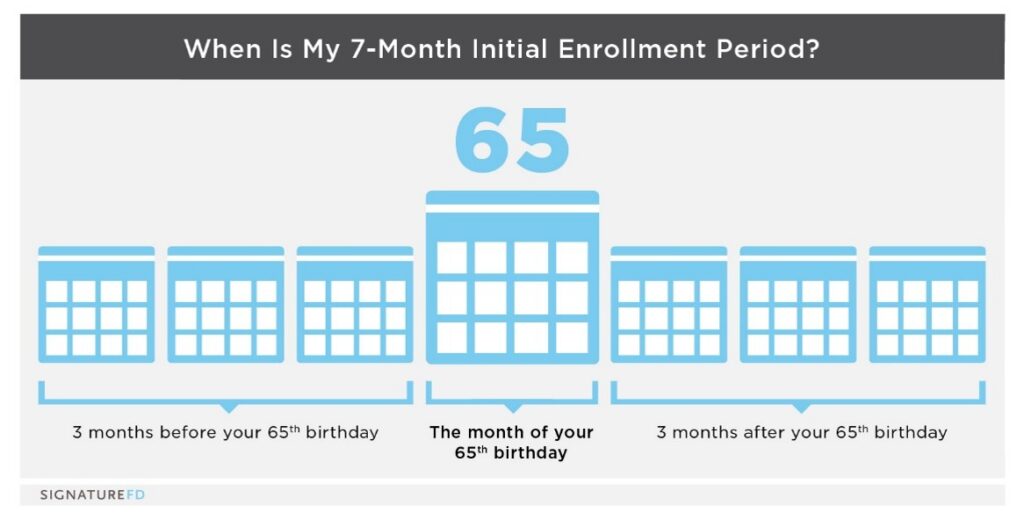
With certain exceptions, you’re required to enroll in Medicare within a seven-month period that centers around your 65th birthday. The enrollment period begins three months prior to the month of your 65th birthday. Failure to enroll when required can lead to penalties that increase Medicare premiums for life.
There are four parts to Medicare: A, B, C, and D, along with Medicare Supplement policies. Medicare A and B are provided by the government. Medicare C and D and Medicare Supplement insurance are sold by private insurance companies.
With traditional Medicare, A, B, and D are required (unless you have qualifying alternative coverage), while the Medicare Supplement Policy is optional. Medicare Supplement policies cover expenses Medicare A and B don’t cover, such as deductibles, copays, and coinsurance. Medicare C, also known as Medicare Advantage, includes comprehensive coverage that can replace Medicare A and B, as well as Medicare Supplement. Some Medicare C policies can also replace Medicare D. One significant drawback of Medicare C, for some clients, is that the network of providers tends to be more limited and less flexible than with traditional Medicare. 
Medicare Parts B and D premium adjustments
Medicare Parts B and D premiums may include an addition to the base premium that is based on income, with higher incomes equating to higher premiums. This amount is referred to as the Income-Related Monthly Adjustment Amount (IRMAA). IRMAA for Medicare is based on Modified Adjusted Gross Income (MAGI).
MAGI = AGI* + Tax-Exempt Interest
* AGI, or adjusted gross income, can be found on line 11a of Form 1040 in your 2025 tax return.
Your MAGI from the prior two years determines Medicare premiums in the current year. For example, the applicable MAGI to determine your Medicare premiums for 2027 will be determined from your 2025 tax return. Depending on your income, your monthly Medicare Part B premium for 2027 can vary within a range. Permanent late enrollment penalties may also apply. If your income has dropped because of a life-changing event since 2025, such as retirement, the death of a spouse, or a divorce, you can ask the Social Security Administration to use more recent income by submitting Form SSA-44. A change in filing status can also move you into a very different bracket. For example, a surviving spouse who begins filing as a single taxpayer may land in a higher bracket than the couple did filing jointly, even if household income has fallen.
Access more information (Note: This fact sheet reflects 2026 amounts and has not yet been updated for 2027, but can give you an idea of how IRMAA and the brackets work). Medicare Part D premiums vary widely depending on the insurance company and drugs covered. These premiums may also have an IRMAA depending on your MAGI.
Several Part D changes take effect in 2027. The annual out-of-pocket cap on covered drugs rises to $2,400 (from $2,100 in 2026), and the maximum Part D deductible rises to $700 (from $615). In addition, temporary federal support that helped keep Part D premiums down in 2025 and 2026 will not continue in 2027, and the number of stand-alone drug plans has been shrinking. Because your plan’s cost, coverage, and drug list can change from year to year, we encourage you to review your plan’s Annual Notice of Change this fall and compare options during open enrollment.
Taxpayers enroll in Medicare as individuals, whether they file tax returns as single, married filing jointly (MFJ), or as married filing separately (MFS). Means testing income brackets for persons who file as MFJ are roughly double compared to the brackets for single filers in most tiers (in 2026, the top tier begins at $500,000 for single filers and $750,000 for joint filers). This structure generally results in comparable costs per person. However, married filing separately income brackets are compressed. As a result, MFS filers reach maximum premium levels more quickly.
Medicare policies have several limitations compared to standard insurance coverage. Medicare does not cover vision, dental care, hearing aids, routine podiatry, and long-term care. Importantly, Original Medicare (Parts A and B) does not have limits on annual or lifetime liability. Liability is unlimited. Medicare does include deductibles, copays, and coinsurance.

Medicare Supplement Insurance
Limitations of the traditional Medicare programs A and B left many seniors exposed to financial risk. In response, the government designed Medicare Supplement Insurance, called MedSupp or Medigap plans, which are sold by insurance companies. The various Medicare Supplement policies are identified by letters: A, B, C, D, F, G, K, L, M, N. Medicare Supplement plans cover some or all of the deductibles, copays, and coinsurance related to Medicare A and B, as well as out-of-pocket expenses of unlimited liability. However, as of January 1, 2020, Medigap policies sold to new Medicare enrollees will not cover the Part B deductible. As a result, Medigap plans C and F are now unavailable for new enrollees. If you were enrolled in Plan C or F before January 1, 2020, you may keep your coverage.
In terms of coverage, one of the most comprehensive Medicare Supplement policies is Plan G, which is frequently selected by SignatureFD clients. It covers most Medicare deductibles, copays, and coinsurance. The main exception is the annual Part B deductible ($283 in 2026), which Plan G does not cover. Before selecting a plan, please review each supplement to determine which is right for you. Discounts may be available for spouses who are purchasing plans from the same insurance company. The plan premium and discount depend on the carrier and plan selected.
Determining your cost of Medicare
The Medicare premium brackets and costs have not yet been released for 2027. However, once costs are released, they can be found at medicare.gov/basics/costs/medicare-costs. Use the tables and your 2025 tax return to estimate your 2027 traditional Medicare premiums. To determine which bracket you are in, calculate your modified adjusted gross income (MAGI) as mentioned above. Medicare A is free for individuals who qualify for Medicare. The total cost will be your Medicare Part B cost, the cost of your Medicare Part D, and the cost of your Medicare Supplement policy. This should be a rough estimate for your premium expenses associated with Medicare.
There are other Medicare complexities beyond the scope of this article. However, this can help you start to work through some of the mysteries surrounding Medicare. If you have questions about Medicare or need help enrolling, please contact your SignatureFD relationship manager. We work with an external resource that we feel confident can help answer questions and help take the mystery out of the enrollment process. For additional resources, including the Medicare Eligibility & Premium Calculator, visit medicare.gov.
SignatureFD is a financial advising firm headquartered in Atlanta, Georgia. We believe in helping our clients achieve wealth beyond money. Our team of investment and financial planning experts is committed to proactively helping clients take control of their financial lives and achieve their goals.